The 2008 CAF African Footballer of the Year: The Award That Still Divides African Football
Few individual awards in African football history have sparked as much debate as the 2008 CAF African Footballer of the Year.
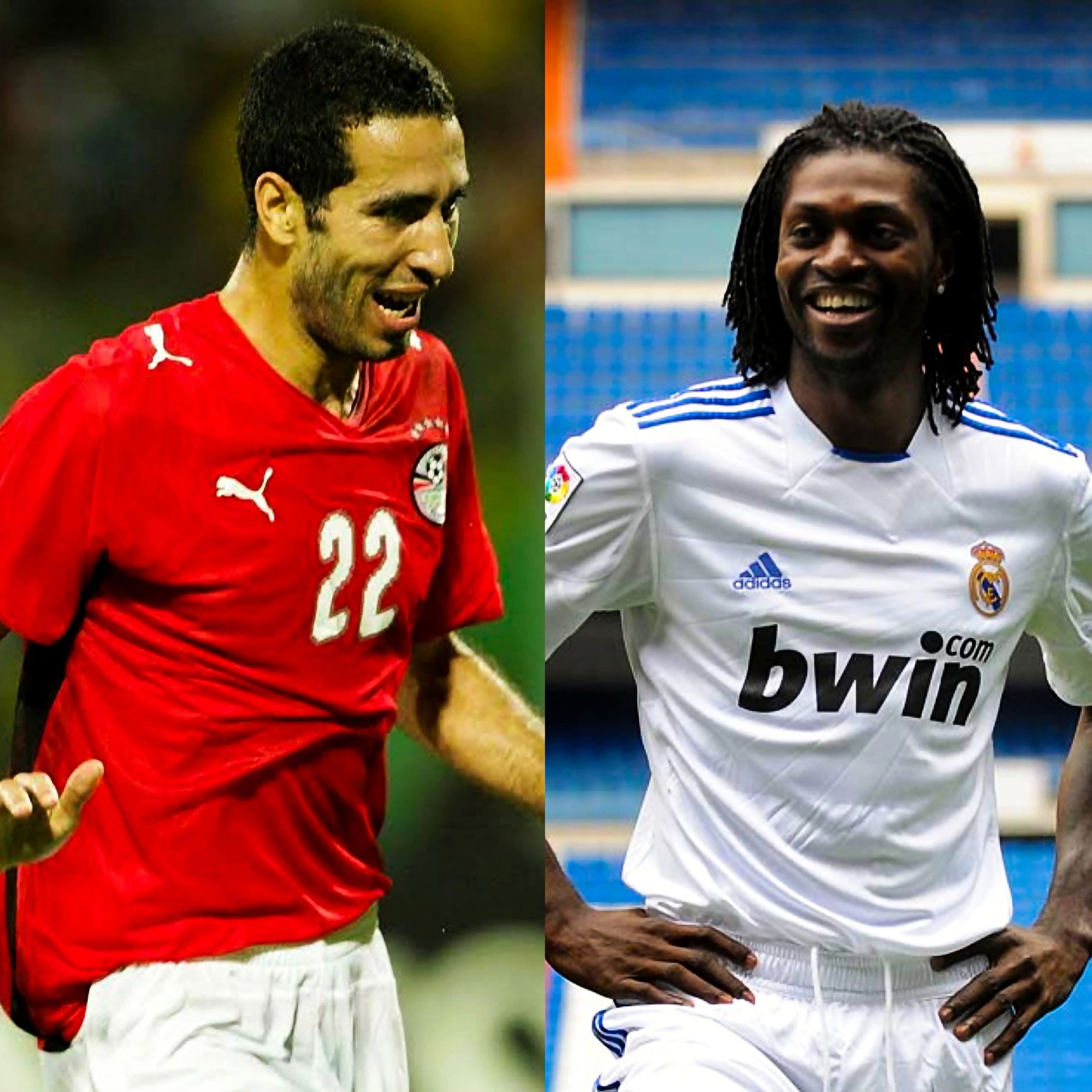
Nearly two decades later, fans are still asking the same question: Did Emmanuel Adebayor truly deserve the award, or was Mohamed Aboutrika robbed?
When the final votes were announced, Togo’s Emmanuel Adebayor claimed the prestigious prize ahead of Egypt’s Mohamed Aboutrika in second place and Ghana’s Michael Essien in third. The decision immediately divided opinion across the continent and it remains one of the most controversial results in CAF award history.
Mohamed Aboutrika’s Incredible 2008
From a trophy and achievements standpoint, few African players enjoyed a better year than Aboutrika.
The Egyptian playmaker inspired Egypt to victory at the 2008 Africa Cup of Nations, scoring the winning goal in the final against Cameroon and earning the Man of the Match award. He was also selected in the tournament’s Best XI after another outstanding AFCON campaign.
At club level, he continued his dominance with Al Ahly, helping the Egyptian giants win the Egyptian Premier League, Egyptian Super Cup and the CAF Champions League.
His individual recognition was equally impressive. He was named in the CAF Team of the Year and later won the BBC African Footballer of the Year after receiving more than half of the public votes from fans across the continent.
By almost every traditional measure team success, individual performances and personal awards Aboutrika appeared to have built the strongest case.
Adebayor’s Case
Emmanuel Adebayor’s year looked very different.
Although Arsenal finished the season without a trophy, the Togolese striker enjoyed the finest campaign of his career. He scored 30 goals in all competitions, established himself as one of the Premier League’s most feared forwards and played a key role in helping Togo reach the final qualifying stage for both the 2010 FIFA World Cup and the 2010 AFCON.
His performances in one of the world’s strongest leagues made him impossible to ignore.
Why Did Adebayor Win?
The answer lies largely in the voting system.
Unlike the BBC award, which was decided by fans, the CAF African Footballer of the Year was voted for by the head coaches of CAF’s member associations. Those coaches ultimately gave Adebayor enough support to finish ahead of both Aboutrika and Essien.
Many observers believed that playing in Europe’s elite leagues carried enormous weight with voters.
While Aboutrika was dominating African football with Al Ahly, Adebayor was starring every week in the English Premier League against some of the world’s best players. That visibility may have significantly influenced the outcome.
Even Aboutrika himself later suggested that Adebayor benefited from competing in the Premier League and the UEFA Champions League, competitions that naturally attracted greater international attention.
A Debate That Never Truly Ended
The controversy did not disappear after the ceremony.
Many fans, analysts and former players argued that Aboutrika’s achievements with both club and country made him the more deserving winner. The debate became a symbol of a wider question in African football:
Should individual awards reward performances and trophies, or should playing in Europe’s biggest leagues carry greater importance?
There has never been a universally accepted answer.
Legacy
History records Emmanuel Adebayor as the 2008 CAF African Footballer of the Year the first player from Togo to win the award.
Yet for many African football supporters, the lasting memory of that year’s ceremony is not Adebayor lifting the trophy, but the feeling that Mohamed Aboutrika’s extraordinary 2008 season deserved the continent’s highest individual honour.
Whether one agrees with the official result or not, the 2008 CAF African Footballer of the Year remains one of the most fiercely debated individual awards in African football history a reminder that football’s greatest arguments often survive far longer than the trophies themselves.